

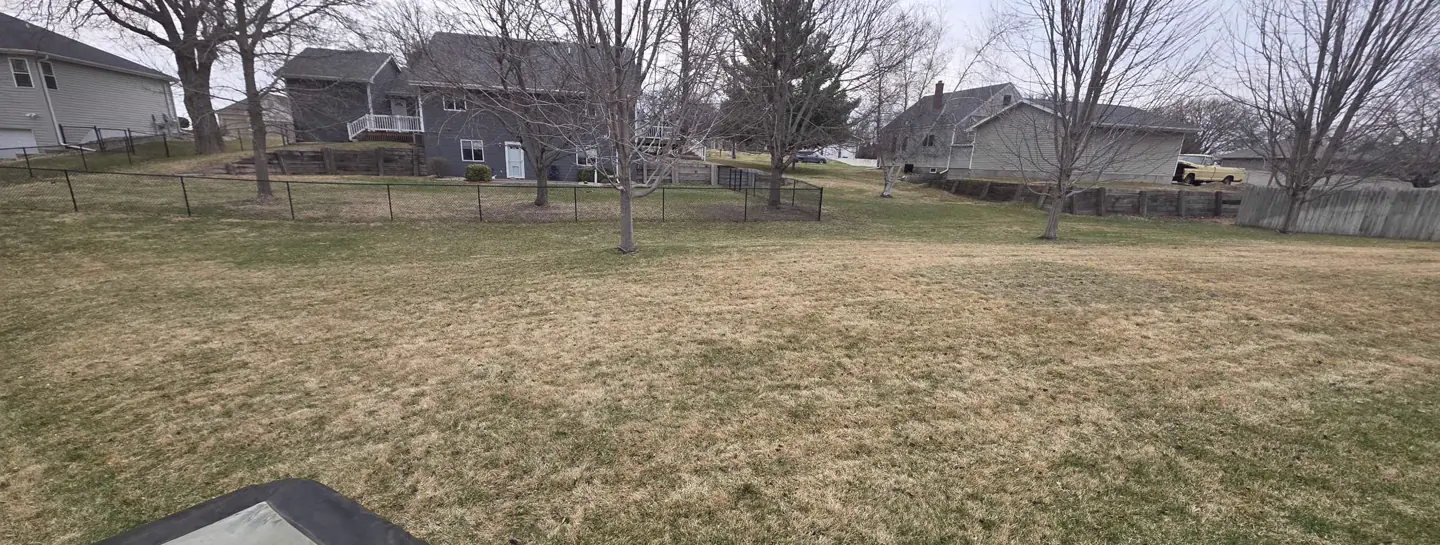
It’s late March or early April in Siouxland, the snow has melted, and you look out at your lawn expecting green — but instead you see a patchwork of brown and green patches. Some areas are greening up nicely while others still look completely dormant. Is your lawn dying? Is something wrong?
The short answer: this is completely normal. Nearly every lawn in the Sioux City, IA area goes through this phase each spring. Here’s what’s actually happening and what you should (and shouldn’t) do about it.
Different Grass Species Green Up at Different Rates in Sioux City, IA
The number one reason your lawn looks like a patchwork quilt in early spring is that different grass species break dormancy at different times. Most lawns in our area contain a blend of cool-season grasses, and each type responds to warming soil temperatures on its own schedule:
- Perennial ryegrass greens up first — it’s always the earliest to wake up
- Turf-type tall fescue follows close behind, thanks to its deep root system
- Kentucky bluegrass is consistently the slowest to green up in spring
If your lawn was seeded with a turf-type tall fescue and Kentucky bluegrass blend (which is what we recommend and use for overseeding), you’ll see the tall fescue clumps turn green while the bluegrass areas are still brown. This gap can last 2 to 4 weeks before everything evens out. It’s not a problem — it’s actually a sign that your lawn has a healthy mix of grass types working together.
Soil Temperature Matters More Than Air Temperature
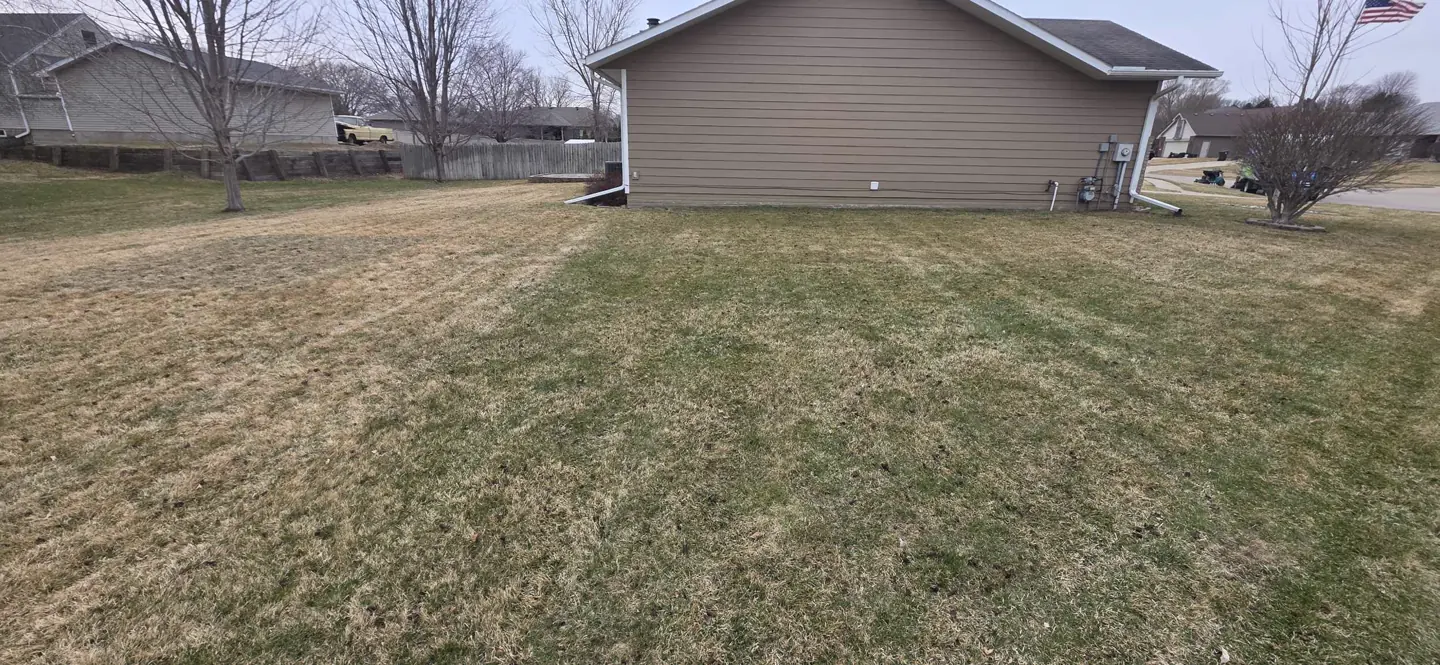
Just because it feels warm outside doesn’t mean your lawn is ready to grow. Grass responds to soil temperature, not air temperature. Cool-season grasses need soil temps to consistently reach 50–55°F before active growth begins, and different parts of your yard warm up at very different rates:
- South-facing areas and spots near dark-colored driveways or foundations absorb and radiate heat, warming the soil faster
- North-facing slopes and areas shaded by your house, fences, or trees can lag behind by 2–3 weeks
- Sandy soils warm up faster than clay soils
- Low-lying areas that hold moisture stay cooler longer
This is why the sunny side of your yard might be green while the shaded side still looks dormant — and why your neighbor’s south-facing lawn might look greener than yours.
Could Those Bright Green Patches Be Weeds?
Here’s something many homeowners don’t realize: some of those early green patches might not be your lawn at all. Poa annua (annual bluegrass) is one of the most common weed grasses in our area, and it greens up very early — often before any of your desirable grasses have woken up.
You can identify Poa annua by its:
- Distinctly lighter, lime-green color compared to the rest of your lawn
- Low-growing, clumpy habit that stands out against dormant turf
- Whitish seed heads that appear even in mowed turf during April and May
The problem? Poa annua is an annual weed that dies off in the summer heat, leaving bare spots right when you want your lawn looking its best. A professional fertilization and weed control program that includes fall pre-emergent treatments is the best way to prevent it from taking hold in the first place.
Snow Mold and Winter Damage
If you see circular, matted patches of whitish-tan grass as the snow melts, you’re likely looking at snow mold. After prolonged snow cover — which is common in the Siouxland area — gray snow mold or pink snow mold can develop under the snowpack. These patches range from a few inches to several feet across and become very visible as surrounding grass starts to green up.
The good news is that gray snow mold typically only damages the leaf blades, and your grass will recover on its own. Pink snow mold can be more severe, sometimes killing the crown and roots, which may require overseeding to repair. In either case, lightly rake the matted areas to improve air circulation and speed recovery — but avoid aggressive power raking this early in the season.
Other types of winter damage that create brown patches include:
- Winter desiccation — exposed areas without snow cover during cold, windy periods can dry out and die
- Salt damage — brown strips along sidewalks and driveways from deicing products
- Dog urine spots — brown centers with characteristic green rings around the edges
When Will My Lawn Fully Green Up?
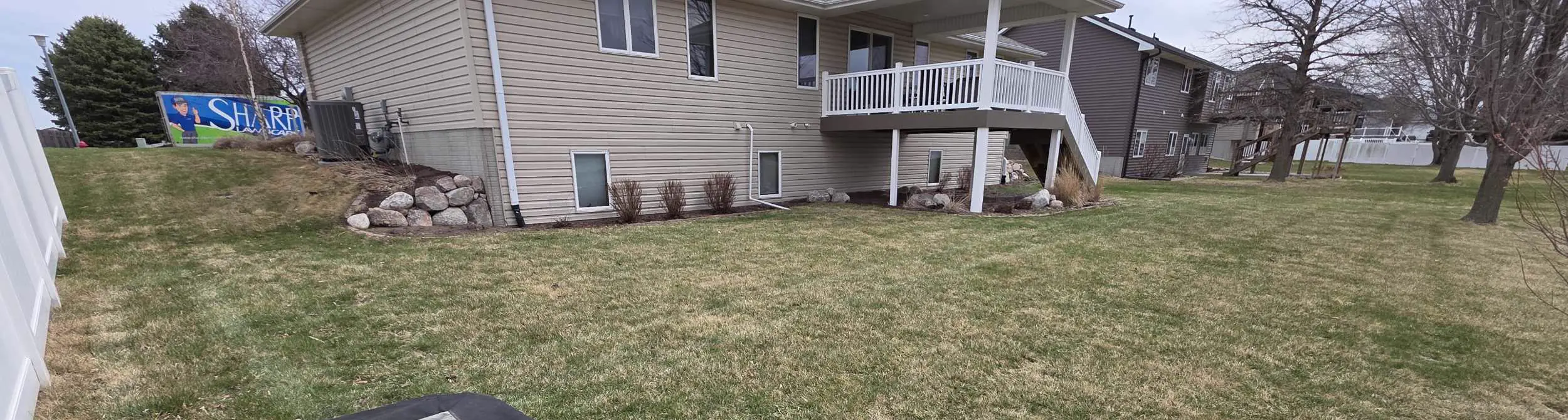
For the Siouxland area, here’s the typical spring green-up timeline:
- Late March – early April: First signs of green in sunny, south-facing areas. Tall fescue and ryegrass patches visible. Most of the lawn is still brown or just transitioning.
- Mid to late April: Tall fescue is mostly green. Kentucky bluegrass is starting but may still have brown patches, especially in shade.
- Early to mid May: The lawn should be fully or nearly fully green. Soil temperatures are consistently above 55°F and all grass species are actively growing.
In a cold or late spring, full green-up can be delayed into mid-May. In a warm, early spring, it can happen by late April. The key benchmark is consistent soil temperatures above 55°F.
What You Should (and Shouldn’t) Do
Don’t panic and don’t rush. The biggest mistake homeowners make in early spring is trying to “fix” a lawn that just needs time. Here’s what to avoid and what actually helps:
Avoid these common mistakes:
- Don’t mow too short. Never cut more than one-third of the blade height. Keep your cool-season lawn at 3–4 inches. Scalping exposes soil to sunlight and promotes weed germination.
- Don’t fertilize too early. Wait until your lawn has been actively growing and needed mowing at least twice. If the grass isn’t growing, it can’t use the fertilizer — you’re just feeding weeds.
- Don’t rake aggressively. Light raking to break up snow mold patches is fine, but heavy power raking in early spring can damage grass crowns that are still emerging from dormancy. Fall is the better time for aeration and dethatching.
- Don’t overwater. Spring soil is typically still moist from snowmelt. Overwatering keeps soil cold and promotes disease.
What you should do:
- Be patient and let the lawn green up naturally over the next few weeks
- Lightly rake any matted snow mold patches to allow air circulation
- Wait for consistent growth before the first mow, then mow at the proper height
- Schedule a professional fertilization and weed control program to begin at the right time based on soil conditions — not the calendar
Get Your Lawn on the Right Track This Spring
A patchy brown-and-green lawn in early spring isn’t a sign of trouble — it’s a sign that the seasons are changing and your grass is waking up on its own schedule. But if you want to make sure it comes back as thick, green, and healthy as possible, a professional lawn care program makes all the difference.
At Sharp Lawn Care, we offer fertilization and weed control, core aeration, liquid aeration, and overseeding to give your lawn everything it needs to thrive. We serve residential and commercial properties in Sioux City, IA and Sioux Falls, SD.
Ready to get started? Call us at (712) 253-8024 for Sioux City, IA or (605) 251-6880 for Sioux Falls, SD — or get a free quote online.

Comments (0)
Thanks for your comment!
Thanks for your feedback! Your comments have been successfully submitted! Please note, all comments require admin approval prior to display.
Error submitting comment!
There is a problem with your comment, please see below and try again.