

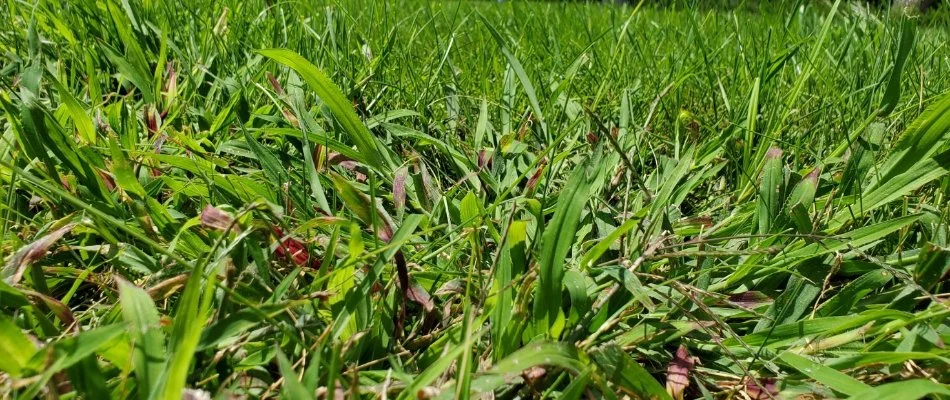
Pre-emergent herbicide is the single most important spring treatment for preventing crabgrass, foxtail, and other annual grassy weeds in the Siouxland area. But timing it correctly is everything. Apply too early and the barrier breaks down before weeds germinate. Apply too late and weed seeds have already sprouted, making the treatment useless. Here’s exactly how to get the timing right.
The 55°F Rule: Why Soil Temperature Matters in Sioux City, IA
Pre-emergent herbicides work by creating a chemical barrier in the top layer of soil that prevents weed seeds from developing roots. For this barrier to be effective, it needs to be in place before those seeds start germinating.
Crabgrass and foxtail seeds begin germinating when soil temperatures reach approximately 55°F at a 4-inch depth for several consecutive days. That’s the trigger. Not air temperature—soil temperature. A warm week in February doesn’t mean it’s time. The ground needs to hold that warmth consistently.
In the Siouxland tri-state area, this typically happens between late March and mid-April, though the exact window shifts every year depending on winter severity and spring weather patterns.
Quick Tip: Track soil temperatures with an inexpensive soil thermometer, or check your local extension office’s reports. When readings hit 50°F and are climbing, it’s time to start planning your application.
What Happens If You Apply Too Early
One of the most common mistakes homeowners make is applying pre-emergent during the first warm spell. It feels proactive, but it’s actually counterproductive.
Pre-emergent herbicides don’t last forever in the soil. Most products provide a window of protection that lasts roughly 8 to 12 weeks. If you apply in late February during a warm stretch, the barrier could break down by mid-May—right when crabgrass seeds are hitting their peak germination period.
The result? You spent the money, did the work, and still ended up with crabgrass. Timing beats enthusiasm every time.
What Happens If You Apply Too Late
Applying pre-emergent after weed seeds have already germinated is like locking the barn door after the horses are out. Once crabgrass seedlings have established even tiny roots, the pre-emergent barrier can’t stop them. At that point, you’ll need post-emergent herbicide treatments to deal with the weeds that are already growing—and those treatments are more involved and less effective on mature crabgrass.
Signs you’ve missed the window:
- You can see light green seedlings sprouting in thin areas of your lawn
- Soil temperatures have been above 55°F for more than two weeks
- Forsythia bushes in your neighborhood have finished blooming (a reliable natural indicator)
Pre-Emergent and Fertilizer: A Powerful Combination
The best approach is to pair your pre-emergent with a spring fertilizer application. This gives your lawn two benefits in one visit: a weed prevention barrier and a feeding that jumpstarts spring green-up.
Professional lawn care programs typically combine pre-emergent with a stabilized fertilizer in the first treatment of the season. This is exactly how Sharp Lawn Care’s Essentials, Plus, and Premium packages are structured—the early spring visit includes both pre-emergent weed prevention and fertilizer to get your lawn off to a strong start. If you’re still weighing whether pre-emergent is even necessary for your lawn, our article on whether pre-emergent treatments are needed in spring covers the why behind the treatment.
Can You Seed and Apply Pre-Emergent at the Same Time?
No—and this is a critical point that catches many homeowners off guard. Pre-emergent herbicides prevent all seeds from germinating, including grass seed. If you’re planning to overseed bare or thin areas, you’ll need to choose one or the other for that section of your lawn.
In most cases, fall is the ideal time for overseeding because it avoids this conflict entirely. You get a full season of pre-emergent and post-emergent weed control in spring and summer, then seed in early fall when conditions are ideal for grass seed germination. This is why we recommend the aeration and overseeding approach in the fall rather than trying to squeeze seeding into the spring window.
Why Professional Timing Makes a Difference
Getting pre-emergent timing right is one of the biggest reasons homeowners switch to professional lawn care. It’s not about the product—you can buy pre-emergent at any garden center. It’s about knowing exactly when to apply it based on real-time soil conditions, having the right equipment to apply it evenly, and making sure it’s watered in properly.
At Sharp Lawn Care, our crews monitor soil temperatures across the Siouxland area and schedule the first treatment of the season based on actual conditions—not the calendar. That’s the difference between a lawn full of crabgrass in July and one that stays clean all season. Wondering what a professional program costs? Our guide to professional lawn care pricing breaks down exactly what you get for your investment.
Get Ahead of Weeds This Spring
The pre-emergent window in the Siouxland area is coming up fast. If you want to prevent crabgrass and foxtail before they take over your lawn, now is the time to get on a professional program. Pre-emergent is just one step—see our complete spring lawn care checklist for everything your lawn needs this season.
Questions? Call our Sioux City office at (712) 253-8024. We serve Sioux City, Sergeant Bluff, Le Mars, Dakota Dunes, North Sioux City, South Sioux City, and surrounding communities throughout the tri-state area.

Comments (0)
Thanks for your comment!
Thanks for your feedback! Your comments have been successfully submitted! Please note, all comments require admin approval prior to display.
Error submitting comment!
There is a problem with your comment, please see below and try again.