

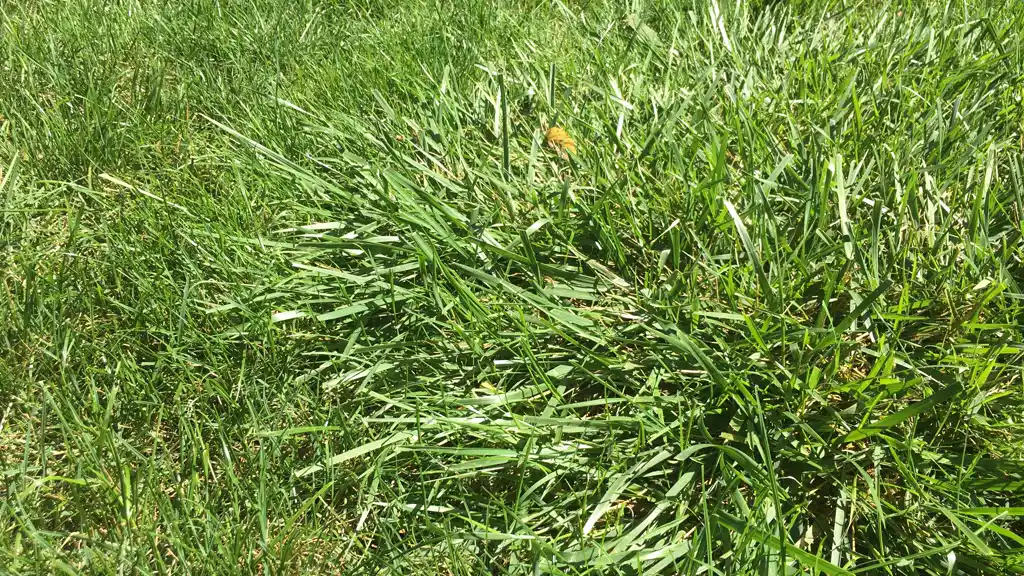
You paid for weed control. You expected a clean, uniform lawn. But there it is—clumps of thick, coarse grass sticking up everywhere. It looks like crabgrass, so naturally you’re thinking, “Did the treatment even work?”
We hear this all the time, and your frustration is completely valid. But here’s the good news: your weed treatment almost certainly IS working. The stuff you’re seeing? It’s probably not crabgrass at all.
Why Your Weed Treatment Looks Like It Failed in Sioux Falls, SD
Selective herbicides—the kind used in professional weed control programs—are designed to target broadleaf weeds like dandelions, clover, and thistle. They do that job extremely well. But here’s the catch: they only work on broadleaf weeds, not grasses.
The thick, ugly clumps you’re seeing in your lawn? Those are almost always grassy weeds—unwanted grass species that blend in until they grow taller and coarser than everything around them. Because they’re grasses, selective herbicide passes right over them. It’s not a failure of the treatment. It’s a completely different problem that requires a completely different solution.
The Usual Suspects—Grassy Lookalikes Mistaken for Crabgrass
Here are the three most common grasses that homeowners mistake for crabgrass:
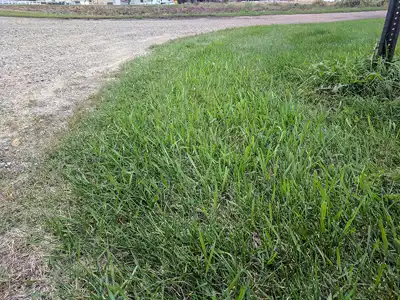
Clumping Tall Fescue
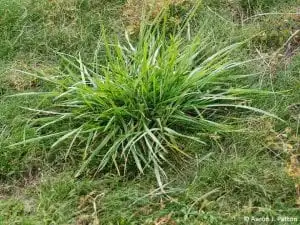
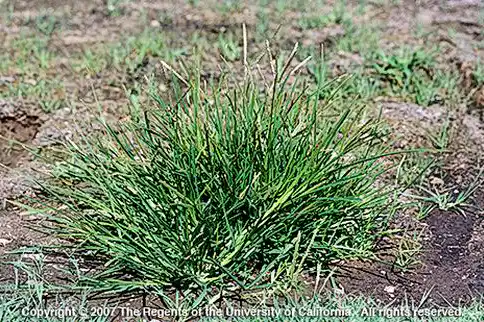
A residential lawn with extensive patches of clumping tall fescue. Notice how the wide, coarse blades create an obvious texture difference from the surrounding turf. Photo: Kevin Frank, MSU
This is the most common offender. Clumping tall fescue grows in distinct, isolated bunches that stick up above the rest of your lawn. The blades are wide, coarse, and have a shiny top surface. Unlike desirable grasses that spread by runners, tall fescue spreads only by seed—which is why it forms those obvious clumps rather than filling in evenly.
It’s a perennial, meaning it comes back in the same spots year after year. If you’ve been staring at the same clumps since last summer, that’s a strong sign it’s tall fescue, not crabgrass. For a quick visual comparison, check out our complete visual identification guide.
Quackgrass
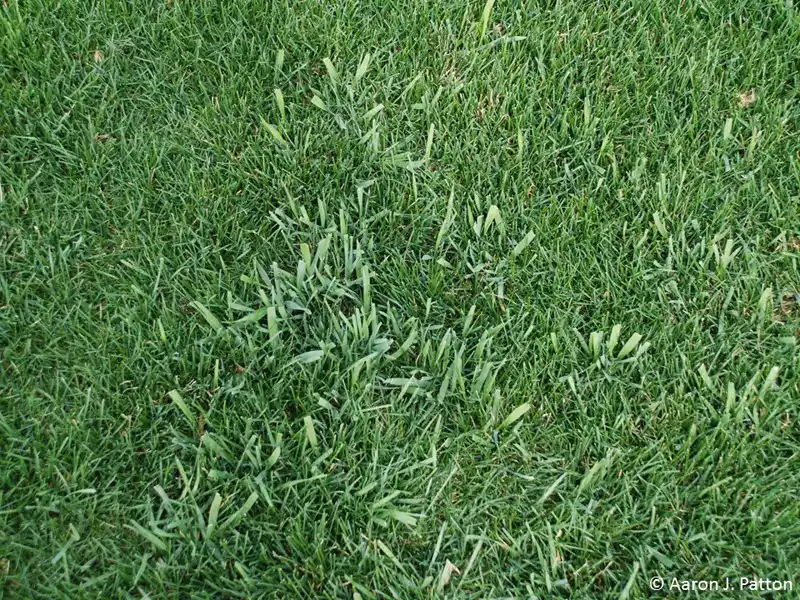
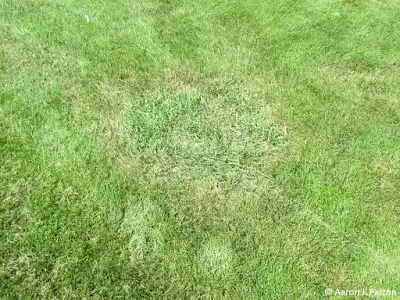
Quackgrass in a Kentucky bluegrass lawn after mowing—notice how the coarser blades and lighter color stand out from the surrounding turf. Photo: Dr. Aaron Patton, Purdue Turfgrass Science
Quackgrass is taller than surrounding turf with a bluish-green color and thick, flat blades. Its telltale feature is the clasping auricles—small finger-like projections that wrap around the stem where the blade meets it. Quackgrass spreads aggressively underground through rhizomes, which makes it especially tough to control. Pull one plant and another pops up a foot away.
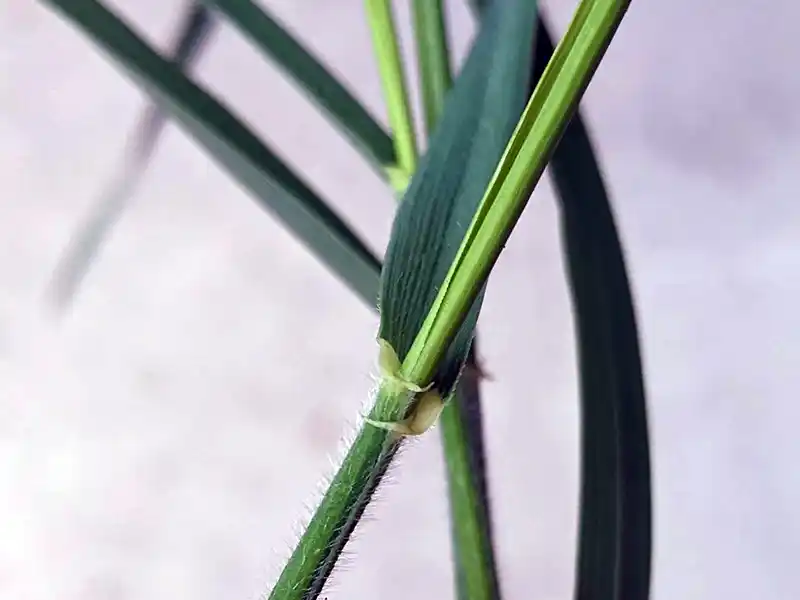
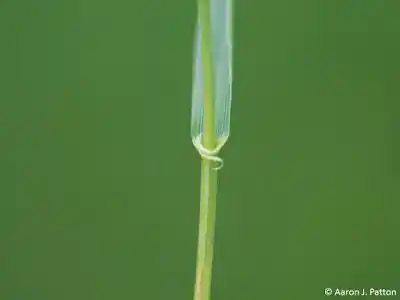
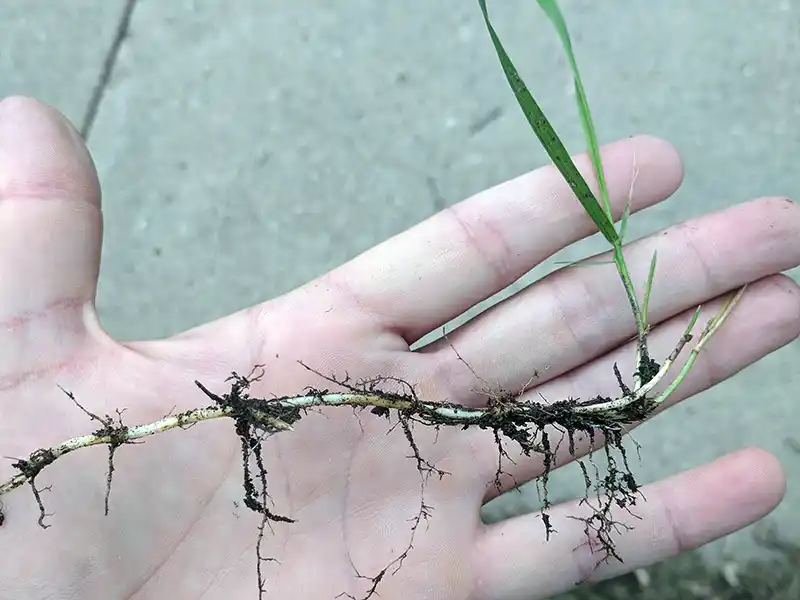
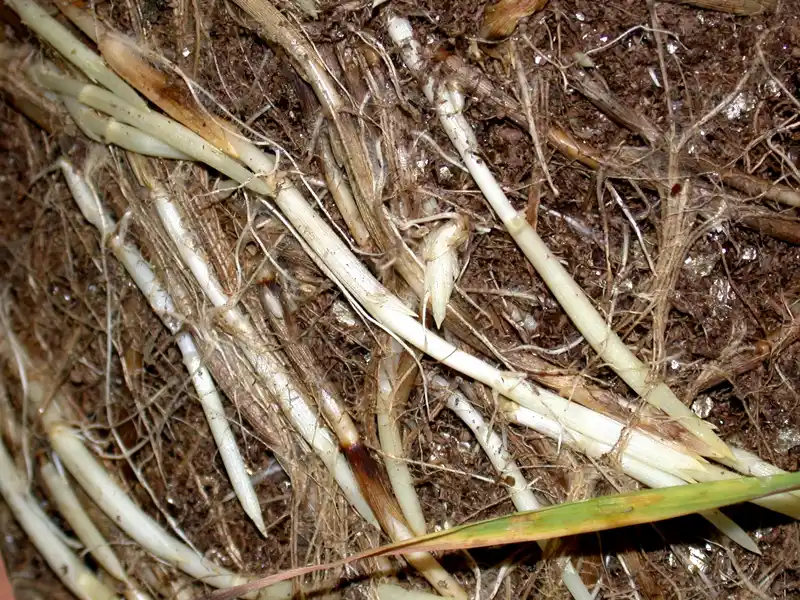
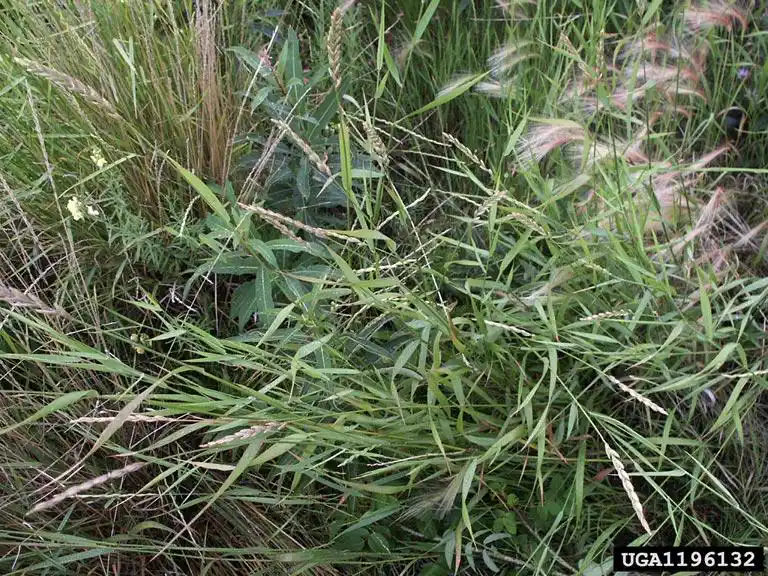
A full quackgrass specimen showing the complete plant from leaf blades to roots. Photo: UMD Extension
Goosegrass
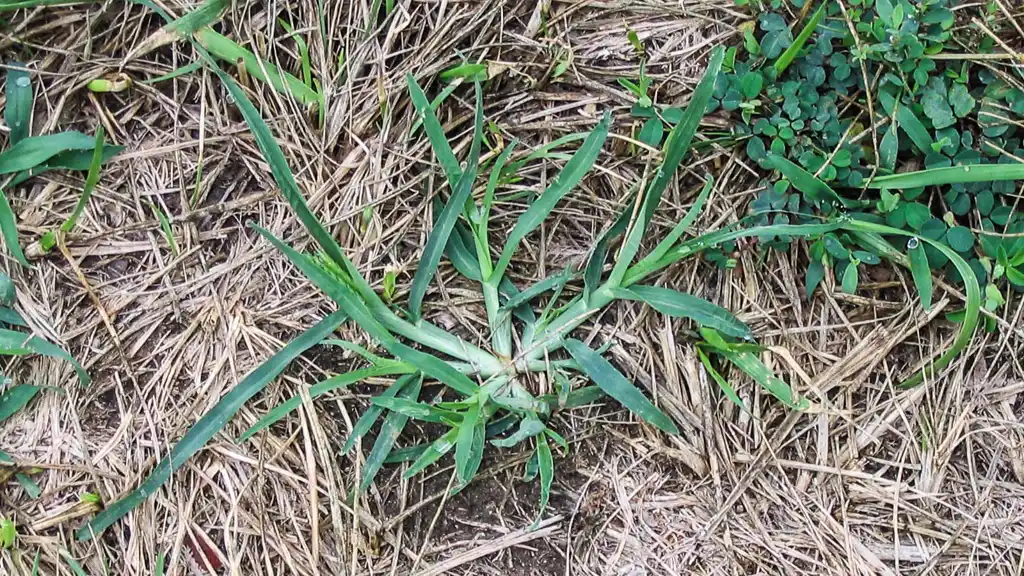
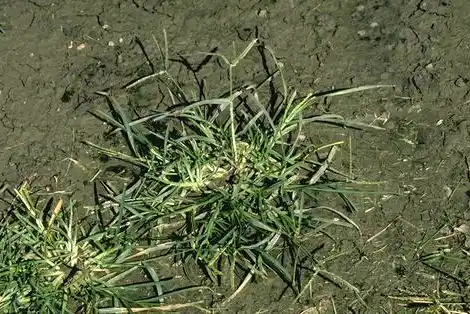
Goosegrass specimen showing its characteristic low, spreading growth habit. Photo: Betty Marose, UMD Extension
Goosegrass is the one most often confused with crabgrass because it has a similar low-growing, spreading habit. The key difference is its distinctive rosette or star pattern at the base, with a silvery-white center. Goosegrass also loves compacted soil, so you’ll typically find it near driveways, sidewalks, and high-traffic areas of the lawn.
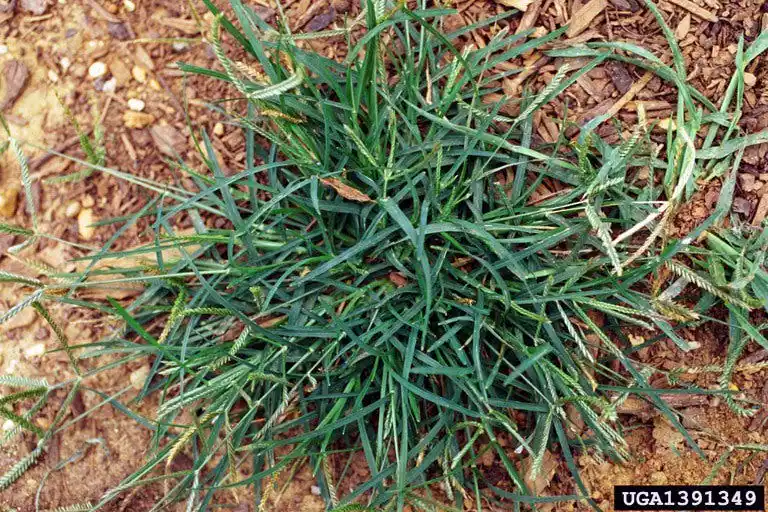
For a more detailed breakdown of how to tell these grasses apart, see our guide to getting rid of crabgrass and grassy weeds.
So What Actually IS Crabgrass?
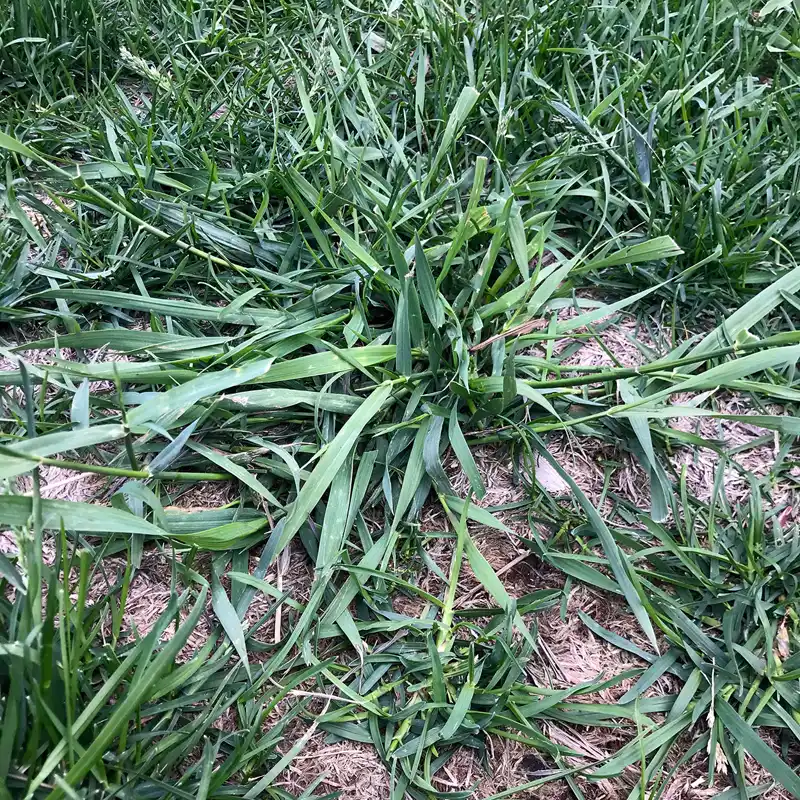
Real crabgrass spreading across a lawn—notice the wider leaf blades and lighter green color compared to the surrounding turf. Photo: SDSU Extension
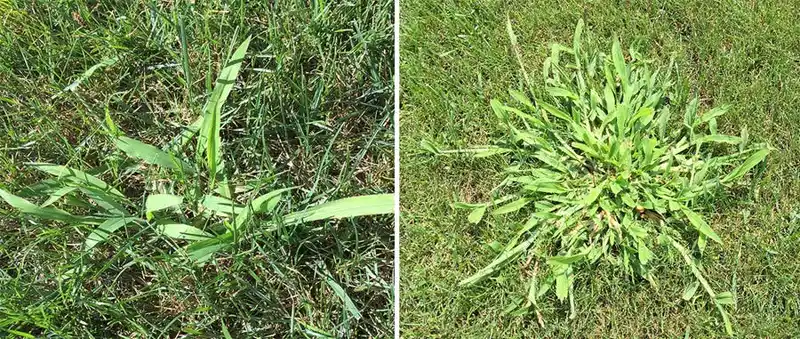
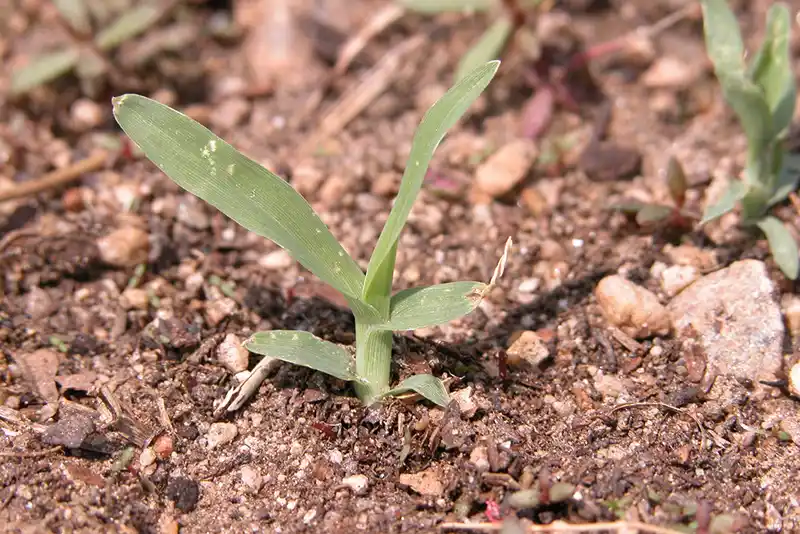
Young crabgrass seedling in June (left) vs. mature plant with multiple spreading tillers in August (right). It starts small and gets much worse. Photo: Peter Landschoot, Penn State Extension
Real crabgrass is a warm-season annual that germinates in late spring when soil temperatures hit about 55°F. It thrives through summer, then dies completely with the first hard frost. Here’s the key insight: if what you’re seeing survived winter and is already growing in early spring, it is NOT crabgrass.
If you’re on a professional lawn care program, your spring pre-emergent treatments are specifically designed to prevent crabgrass from germinating in the first place. So the actual crabgrass problem? It’s likely already handled. Learn more about why pre-emergent treatments matter.
Why Can’t You Just Spray These Grassy Weeds?
This is the question we get most often, and the answer comes down to chemistry. A selective herbicide works by exploiting biological differences between broadleaf plants and grasses. But it can’t tell the difference between a grass you want (like Kentucky bluegrass) and one you don’t (like quackgrass). To your herbicide, they’re all just… grass.
The only option for removing grassy weeds is a non-selective herbicide—a product that kills everything it touches, including your good lawn grass. That’s why we can’t just blanket-spray it across your yard. This isn’t a failure of your lawn care company—it’s how herbicide chemistry works.
There’s another important nuance here: these grassy “weeds” aren’t technically weeds at all. They’re grasses. Some homeowners actually prefer tall fescue for its drought tolerance, or don’t mind a little quackgrass mixed in. Beauty is in the eye of the beholder, and there’s no way for us to know whether you consider a particular grass type a problem or not unless you tell us.
When Should You Remove Grassy Weeds?
It’s tempting to want them gone the moment you notice them—but killing grassy weeds mid-season is actually the wrong move. Here’s why: when you kill off a patch of grass (even unwanted grass), you’re left with bare soil. And bare soil is an open invitation for new weeds to move right in. You’d be trading one problem for another.
The smart approach is to spot-treat with non-selective herbicide a few weeks before fall overseeding. This kills the unwanted grass, and then the bare spots get immediately filled with desirable grass seed before weeds can establish. It’s a one-two punch that actually solves the problem long-term. For more on the ideal timing, read our guide on the best fall window to seed your lawn.
If you have just a few isolated clumps, you can also dig them out by hand. Just be thorough—especially with quackgrass, where leaving even a small piece of rhizome underground means it’ll be back.
A Thick Lawn Is Your Best Long-Term Defense
The best way to prevent grassy weeds from taking over is to grow a lawn so thick and healthy that there’s simply no room for them. That means following the proven process: aerate to reduce compaction, fertilize and control weeds consistently, overseed in the fall, mow at the right height, and water deeply.
We use a turf-type tall fescue and Kentucky bluegrass blend that’s specifically chosen for our climate. It’s not an overnight fix—it’s a one-to-two season process. But the results speak for themselves.
Your weed treatment IS working—it’s doing exactly what it’s supposed to. These grassy lookalikes just need a different strategy, and we’re happy to help you figure out the best plan for your lawn.
Give us a call at (605) 251-6880 or get a free quote to talk through your options.

Comments (0)
Thanks for your comment!
Thanks for your feedback! Your comments have been successfully submitted! Please note, all comments require admin approval prior to display.
Error submitting comment!
There is a problem with your comment, please see below and try again.