

Spring in the Sioux Falls area can feel like it arrives all at once. One week you’re looking at snow, and the next your neighbors are firing up their mowers. If you want a lawn that’s thick, green, and weed-free by summer, it pays to follow a checklist—hitting each step at the right time instead of scrambling to catch up. Here’s your complete spring lawn care guide, in the order things should happen.
Clean Up Winter Debris in Sioux Falls, SD
Before you do anything else, walk your lawn and take stock of what winter left behind. Fallen branches, matted leaves, and other debris trap moisture against the turf and create perfect conditions for snow mold—a fungal disease that shows up as circular gray or pink patches in early spring.
- Rake up matted leaves and dead grass to let air and sunlight reach the soil
- Remove fallen branches, twigs, and any leftover holiday decorations
- Check for snow mold patches—they usually recover on their own once the area dries out
- Look for areas where ice or snowplows may have damaged the turf edges
This step sounds simple, but it makes a real difference. Turf that’s been smothered all winter needs air circulation and sunlight to start greening up. Getting debris off the lawn early gives your grass a head start.
Schedule Your First Fertilizer + Pre-Emergent Treatment
This is the most time-sensitive step on the list. Your first spring fertilizer application should be paired with a pre-emergent herbicide—and timing it correctly is everything.
Pre-emergent herbicides create a barrier in the soil that prevents crabgrass and foxtail seeds from germinating. That barrier needs to be in place before soil temperatures reach 55°F at a 4-inch depth for several consecutive days. In the Sioux Falls metro, this typically happens between late March and mid-April, though it varies year to year.
Important: If you’re not sure about timing, don’t guess. Apply too early and the barrier breaks down before weeds germinate. Apply too late and crabgrass seeds have already sprouted. For a deeper dive on this, read our guide on when to apply pre-emergent herbicide.
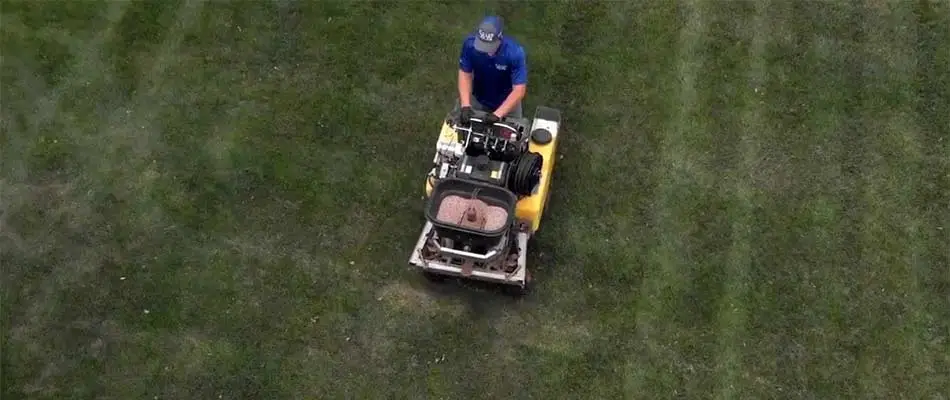
A professional lawn care program takes the guesswork out of this step. At Sharp Lawn Care, our crews monitor soil temperatures across the Sioux Falls area and schedule the first treatment based on actual conditions—not a calendar date.
Set Your Mowing Height Correctly
Once your lawn starts actively growing, it’s time to mow—but mowing height matters more than most people realize. For the cool-season grasses common in the Sioux Falls area (turf-type tall fescue and Kentucky bluegrass), the ideal mowing height is 3 to 3.5 inches.
Taller grass shades the soil surface, which does two things: it helps retain moisture and it makes it harder for weed seeds to germinate. Cutting your lawn too short—sometimes called “scalping”—stresses the grass and opens the door for weeds to take over.
Follow the one-third rule: never remove more than one-third of the grass blade in a single mowing. If your target height is 3 inches, mow before the grass reaches 4.5 inches. This keeps the turf healthy and avoids the shock that comes with drastic cuts.
Begin Deep Watering
South Dakota winters can be dry, and spring rainfall isn’t always enough to rehydrate your lawn’s root zone. The goal is 1 inch of water per week, including any rainfall. If Mother Nature isn’t cooperating, you’ll need to supplement with irrigation.
The key is watering deeply and infrequently rather than giving your lawn a light sprinkle every day. Deep watering encourages roots to grow down into the soil, making your lawn more resilient when summer heat arrives. Light, frequent watering does the opposite—it keeps roots shallow and dependent on constant moisture.
If your lawn went through a particularly dry winter, it may need extra attention early in the season. Our article on how to revitalize your lawn after a dry winter covers exactly what to do.
Address Bare or Thin Spots
After winter cleanup, you’ll probably notice a few bare patches or thin areas—especially in high-traffic zones or spots where snow was piled all season. Your first instinct might be to throw down grass seed, but here’s the catch: spring seeding and pre-emergent herbicides don’t mix.
Pre-emergent prevents all seeds from germinating, including grass seed. If you’ve already applied pre-emergent (and you should), any grass seed you put down in those areas won’t take.
The better approach is to note where the thin spots are and plan to address them in early fall, when conditions are ideal for seeding. Core aeration followed by overseeding in late August or September gives new grass seed the warm soil, cooler air temperatures, and reduced weed competition it needs to establish successfully.
In the meantime, focus on keeping those thin areas well-watered and properly fertilized. A healthy fertilization program will help the existing grass fill in naturally over the growing season.
Watch for Early Weeds
Even with a properly timed pre-emergent application, some weeds will still show up. Pre-emergent targets annual grassy weeds like crabgrass and foxtail, but it doesn’t prevent broadleaf weeds like dandelions, clover, or ground ivy from popping up.
That’s where post-emergent weed control comes in. Post-emergent herbicides are applied directly to weeds that are already growing and actively spreading. The best time to treat broadleaf weeds is when they’re young and actively growing in spring—mature weeds are harder to kill.
If you spot weeds sprouting, don’t panic. A second treatment in late spring that combines fertilizer with broadleaf weed control is a standard part of any professional lawn care package. The goal is to stay ahead of weeds rather than chasing them all summer.
Plan Ahead: Aeration and Overseeding in Fall
Spring is for prevention and feeding. Fall is for renovation. The best thing you can do for your lawn’s long-term health is to aerate and overseed in late summer or early fall—typically late August through mid-September in the Sioux Falls area.
Core aeration relieves soil compaction and creates channels for air, water, and nutrients to reach the root zone. Overseeding after aeration introduces new grass plants into the lawn, thickening the turf and crowding out weeds naturally. Together, these two steps are the foundation of the Sharp Lawn Roadmap—the proven process for building the best lawn in the neighborhood.
Planning ahead means you can get on the schedule early. Aeration and overseeding appointments fill up fast in the Sioux Falls metro, so don’t wait until September to call.
Get Your Lawn on the Right Track This Spring
A great lawn doesn’t happen by accident. It’s the result of doing the right things at the right time—and spring is where it all starts. Whether you need a full fertilization and weed control program, help with aeration timing, or just want a professional to handle it all, Sharp Lawn Care has you covered. Curious about what a professional program runs? Check out our professional lawn care cost guide for a transparent breakdown.
Questions? Call our Sioux Falls office at (605) 251-6880. We serve Sioux Falls, Brandon, Harrisburg, Tea, and surrounding communities throughout the Sioux Empire.

Comments (0)
Thanks for your comment!
Thanks for your feedback! Your comments have been successfully submitted! Please note, all comments require admin approval prior to display.
Error submitting comment!
There is a problem with your comment, please see below and try again.