

You’ve noticed grass in your lawn that looks different from the rest — maybe it’s coarser, lighter green, or spreading in a weird pattern. You’ve figured out what it is. Now it’s time to get rid of it. But here’s what most homeowners learn the hard way: you can’t kill crabgrass without killing your grass using the same products that wipe out dandelions. Controlling grassy weeds is fundamentally different from broadleaf weed control, and the wrong approach won’t just fail — it can damage your lawn or waste an entire growing season.
This guide covers every proven control method for the most common grassy weeds in the Siouxland area — from the best pre-emergent crabgrass preventer timing to quackgrass removal to long-term prevention strategies that actually work. Not sure what kind of grass you’re dealing with? Start with our visual identification guide first.
Why Grassy Weeds Are Harder to Kill Than Dandelions
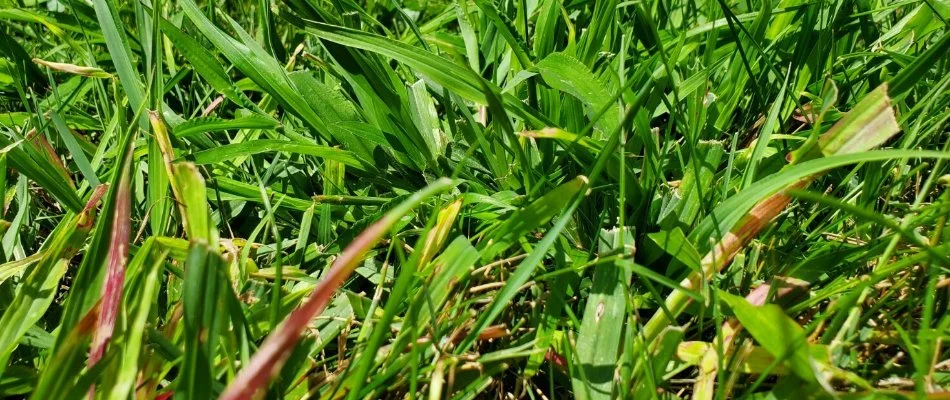
When you spray for dandelions, clover, or creeping charlie, those weeds die within days. That’s because selective broadleaf herbicides — products containing 2,4-D, dicamba, or triclopyr — target cellular structures that are unique to broadleaf plants. They leave your grass completely unharmed.
Grassy weeds are a completely different problem. Crabgrass, quackgrass, goosegrass, and foxtail are all grasses — they share the same basic biology as your Kentucky bluegrass and tall fescue lawn. A herbicide that kills crabgrass will also kill your desirable grass, because at the cellular level, they’re nearly identical.
This means you only have two real strategies:
- Prevent them from germinating — using pre-emergent herbicides that create a barrier in the soil
- Remove them after they appear — through targeted post-emergent products (for crabgrass only), non-selective spot treatments, or physical removal
Pre-Emergent Herbicides — Your Best Weapon Against Crabgrass in Sioux City, IA
Pre-emergent herbicides are the single most effective tool for crabgrass control. They work by creating a chemical barrier at the soil surface that prevents newly germinated seedlings from establishing roots. The seed germinates, but the young plant dies before it can grow into a visible weed.
Timing Is Everything
In the Siouxland area, the pre-emergent application window typically falls between mid-March and early April — when soil temperatures consistently reach 50–55°F at a 4-inch depth. A traditional timing indicator: when forsythia bushes begin blooming in your neighborhood, it’s time to apply.
Apply too early, and the product may break down before crabgrass season ends. Apply too late, and crabgrass seeds that have already germinated will grow right through the barrier untouched.
Split Applications for Season-Long Protection
A single pre-emergent application typically provides 8–12 weeks of protection. In our area, the crabgrass germination window can stretch from late May through July. That’s why lawn care professionals often use split applications — a first application in early spring, followed by a second application 6–8 weeks later. This extends the protection window to cover the entire germination season.
What the Pros Use vs. Store-Bought Products
Homeowners often ask what the best pre-emergent for crabgrass is. Professional-grade crabgrass preventers use the same active ingredients available at retail (prodiamine, dithiopyr, pendimethalin), but at precisely calibrated rates applied with commercial spreaders for perfectly even coverage. The most common failure with DIY pre-emergent isn’t the product — it’s uneven application that leaves gaps where crabgrass breaks through.
What Pre-Emergent Won’t Do
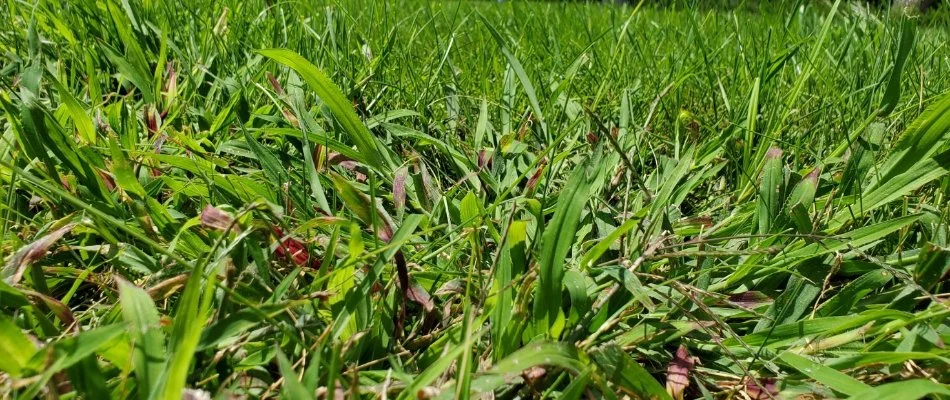
Pre-emergent herbicides only work on weeds that spread by seed germination. They are highly effective against crabgrass, goosegrass, foxtail, and annual bluegrass. However, they will not control quackgrass — because quackgrass primarily spreads through underground rhizomes, not seeds. If quackgrass is your problem, you’ll need a different approach (see below).
Post-Emergent Options for Active Crabgrass
If crabgrass has already emerged in your lawn, your options depend on how far along it is:
Young Crabgrass (1–3 Tillers)
When crabgrass is still small — just a few blades emerging from a single point — quinclorac-based products can selectively target it without damaging most desirable lawn grasses. This is a narrow window, typically in June through early July. The younger the plant, the more effective the treatment.
Mature Crabgrass (Spreading, Seed Heads Forming)
Once crabgrass reaches its spreading, star-shaped growth stage and begins producing seed heads (usually by August), it’s nearly impossible to kill selectively. At this point, you have two practical options:
- The “let it die” strategy: Crabgrass is an annual — the first hard frost kills it completely. Mark the locations of heavy infestations, and plan to overseed those bare spots in fall. Apply pre-emergent the following spring to break the cycle.
- Non-selective spot treatment: For large, unsightly patches where waiting until frost isn’t acceptable, spot-treat with a non-selective herbicide (like glyphosate). This will kill everything it touches — crabgrass and your lawn grass alike. Wait 10–14 days, rake out the dead material, and reseed the area.
How to Get Rid of Quackgrass
Quackgrass is arguably the most frustrating grassy weed to deal with. There is no selective herbicide that will kill it without also killing your lawn. Your only two options require patience and follow-through.
Method 1 — Non-Selective Spot Treatment
- Apply a non-selective herbicide (glyphosate) directly to the quackgrass patches. Be precise — everything this product touches will die.
- Wait 10–14 days for complete kill. The above-ground growth and underground rhizomes need time to fully absorb the product.
- Rake out all dead material.
- Reseed with desirable grass seed and keep the area consistently moist until germination.
Best timing: Late summer, about 3–4 weeks before your planned fall overseeding date. This lets you kill the quackgrass and reseed in one efficient cycle.
Method 2 — Manual Removal
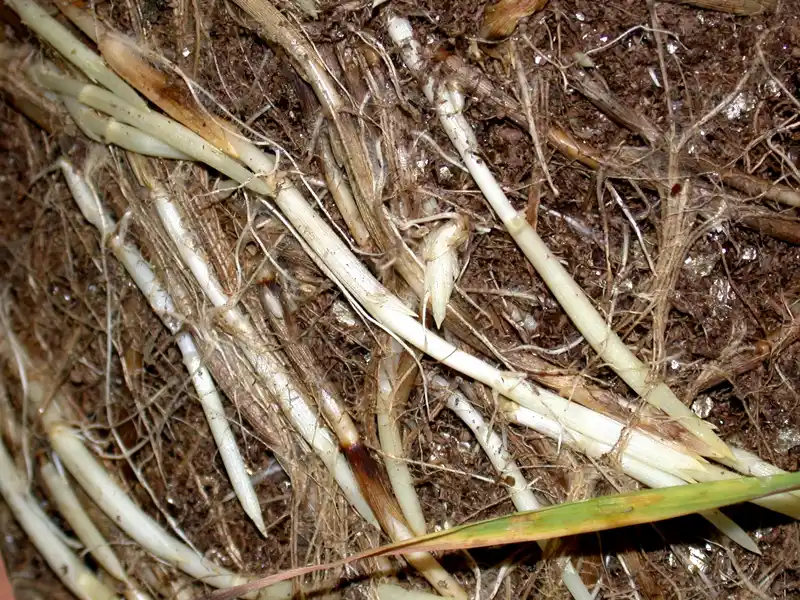
Dig out the entire plant, including all underground rhizomes. This is critical — any rhizome fragment left in the soil will regenerate into a new plant. Use a garden fork rather than a spade, as forks are less likely to sever rhizomes into pieces.
Why It’s a Long-Term Battle
Even after successful removal, quackgrass often returns. Seeds blow in from neighboring properties, and rhizome fragments can survive deep in the soil. The best approach is a combination of removal plus building a thick, competitive lawn that gives quackgrass less opportunity to establish.
Controlling Goosegrass, Tall Fescue, and Other Grassy Weeds
Goosegrass — Fix the Compaction First
Goosegrass is a symptom of compacted soil. While pre-emergent herbicides can help prevent it (same spring timing as crabgrass, though goosegrass germinates slightly later), the most effective long-term solution is addressing the soil compaction that attracted it in the first place. Core aeration opens up compacted soil, improves drainage, and allows desirable grass roots to grow deeper — making it much harder for goosegrass to compete.
Clumping Tall Fescue — Dig or Spot-Treat
Individual clumps of tall fescue in an otherwise fine-bladed lawn can only be removed physically. Dig out the clump (roots and all) and fill the hole with soil and desirable seed. Alternatively, spot-treat each clump with a non-selective herbicide, wait for it to die, and reseed. Because tall fescue spreads only by seed, removing existing clumps and maintaining a thick lawn prevents new ones from establishing.
Annual Bluegrass (Poa Annua) — Fall Pre-Emergent
Here’s where timing gets counterintuitive: annual bluegrass germinates in late summer and fall — the opposite of crabgrass. A spring pre-emergent won’t touch it. Instead, apply a pre-emergent in September or early October to prevent Poa annua seeds from establishing. Also improve drainage in shaded, moist areas where this weed thrives.
Foxtail — Same Playbook as Crabgrass
Foxtail responds to the same pre-emergent timing as crabgrass. If foxtail is your main concern, ensure your spring pre-emergent coverage extends long enough — foxtail can germinate later in the season when earlier applications have worn off. Also, mow before seed heads mature to reduce the seed bank for next year.
The Long-Term Defense — Building a Lawn That Resists Weeds
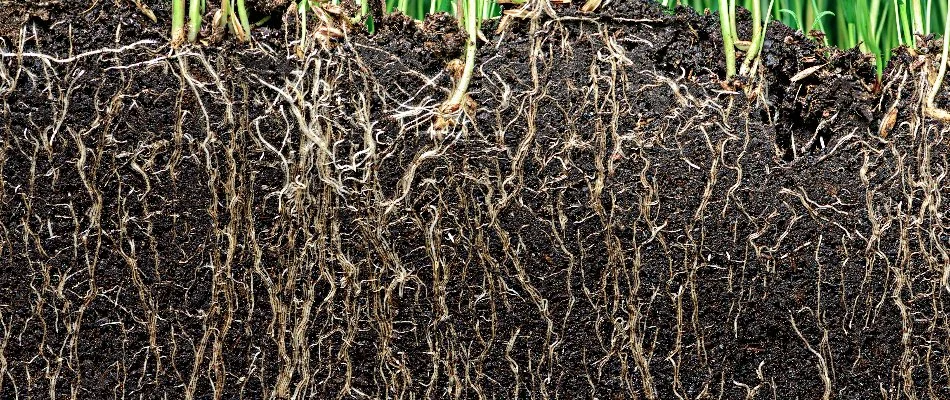
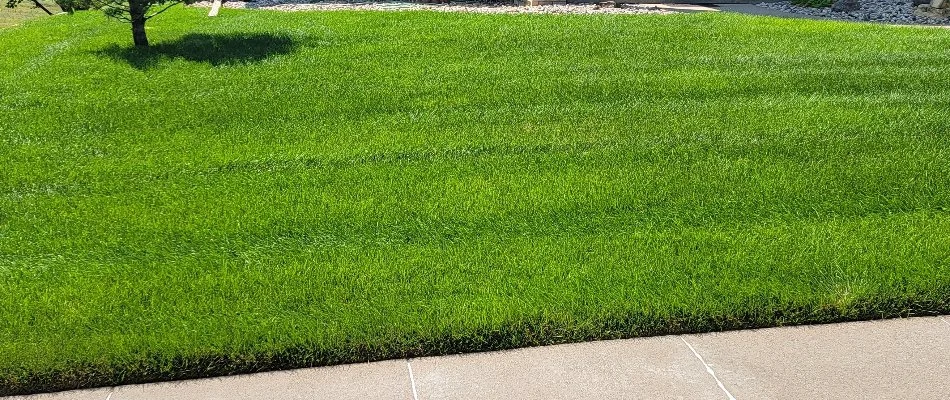
Herbicides are reactive. The real long-term solution is building a lawn so thick and healthy that weeds can’t find room to establish. Every grassy weed on this list exploits the same thing: thin spots, bare soil, and stressed turf. Eliminate those conditions and you eliminate most weed problems.
Core Aeration
Annual core aeration in the fall relieves soil compaction, improves water and nutrient penetration, and creates the ideal environment for grass seed establishment. It’s especially important for goosegrass prevention — compacted soil is an open invitation.
Overseeding
Every bare or thin spot in your lawn is an opportunity for weeds. Fill those gaps before weeds do by overseeding in the fall — mid-August through mid-September is the ideal window in the Siouxland area. Pair it with aeration for the best seed-to-soil contact.
Mowing Height
Keep your mower at 4 inches or higher, especially during the summer months. Taller grass shades the soil surface, which directly inhibits weed seed germination. Many homeowners cut too short, thinking it looks neater — but scalping your lawn is one of the biggest contributors to weed invasion.
Watering
Water deeply and infrequently — about 1 inch per week, applied in 1–2 sessions rather than daily light sprinklings. Deep watering encourages deep root growth in your desirable grass, while shallow daily watering keeps the soil surface moist and favors weed seed germination.
Fertilization
A well-fed lawn outcompetes weeds naturally. Consistent fertilization throughout the growing season keeps your grass dense, vigorous, and able to crowd out invaders before they get started.
When to Act — Seasonal Grassy Weed Calendar for Siouxland
Timing is everything with grassy weed control. Use this calendar to stay ahead of every major grassy weed in the Siouxland area:
| Season | What to Do |
|---|---|
| Early Spring (March–April) |
Pre-emergent application window. Soil temps approaching 50–55°F. This is the single most important treatment of the year for crabgrass prevention. Don’t miss it. |
| Late Spring (May) |
Monitor for crabgrass breakthrough in thin or bare spots. If you missed the pre-emergent window, it’s too late for prevention — prepare for post-emergent treatment when plants appear. |
| Early Summer (June–July) |
Post-emergent window for young crabgrass (quinclorac). Remove or spot-treat quackgrass patches. Watch for goosegrass in compacted areas near driveways and paths. |
| Late Summer (August) |
Final spot-treatment window before fall seeding. Time non-selective treatments 3–4 weeks before your planned overseeding date. |
| Fall (September–October) |
Build next year’s defense. Overseed bare spots. Aerate to relieve compaction. Apply pre-emergent for Poa annua. Thick fall turf means fewer weeds next spring. |
| Winter (November–February) |
Plan ahead. Note problem areas while they’re fresh. The battle against grassy weeds is won through preparation, not reaction. |
When to Call a Professional
Some grassy weed problems are manageable as DIY projects. Others benefit from professional knowledge and equipment.
DIY works well for:
- Digging out individual tall fescue clumps or small quackgrass patches
- Spot-treating isolated weed clusters with non-selective herbicide
- Maintaining good mowing height and watering practices
Professional treatment is more effective for:
- Widespread crabgrass requiring precisely timed and evenly applied pre-emergent coverage
- Integrated programs that combine weed control with fertilization for season-long results
- Identifying what you’re actually dealing with — many homeowners treat the wrong weed for months before getting a proper diagnosis
Sharp Lawn Care’s weed control and fertilization program includes professionally timed pre-emergent and post-emergent applications throughout the growing season, paired with fertilization to build a thick, competitive lawn that resists weeds naturally.
Not sure what weed you’re dealing with? Use our complete visual identification guide to figure out exactly what’s in your lawn. Already tried treating but still seeing problems? Read our guide on why you might still be seeing “crabgrass” after treatment.
Serving the Siouxland tri-state area including Sioux City, Dakota Dunes, North Sioux City, Sergeant Bluff, and surrounding communities. Call (712) 253-8024 or Get a Free Quote to get started.

Comments (0)
Thanks for your comment!
Thanks for your feedback! Your comments have been successfully submitted! Please note, all comments require admin approval prior to display.
Error submitting comment!
There is a problem with your comment, please see below and try again.