

Your Lawn Is Suffocating — Here’s Why
If your lawn looks thin, patchy, or just refuses to fill in no matter what you do, the problem isn’t your effort—it’s what’s happening underground. Soil compaction is the hidden issue that holds back the majority of lawns across the Sioux Falls metro, and most homeowners don’t even know it’s there.
South Dakota’s heavy clay soils compact easily under foot traffic, mowing equipment, and the natural freeze-thaw cycles we deal with every year. When that soil gets too tight, roots can’t expand. Water pools on the surface instead of soaking in. Fertilizer sits on top and goes to waste. Thatch builds up because microorganisms can’t do their job in oxygen-starved soil.
Think of it this way: if you throw grass seed on concrete, it won’t grow. Compacted soil is the same problem—just less obvious. The surface looks like dirt, but underneath it’s nearly as hard as pavement. That’s why lawns stay thin despite homeowners doing everything else right. Until you fix the soil, nothing else you do will reach its full potential.
How Core Aeration Fixes Compacted Soil in Sioux Falls
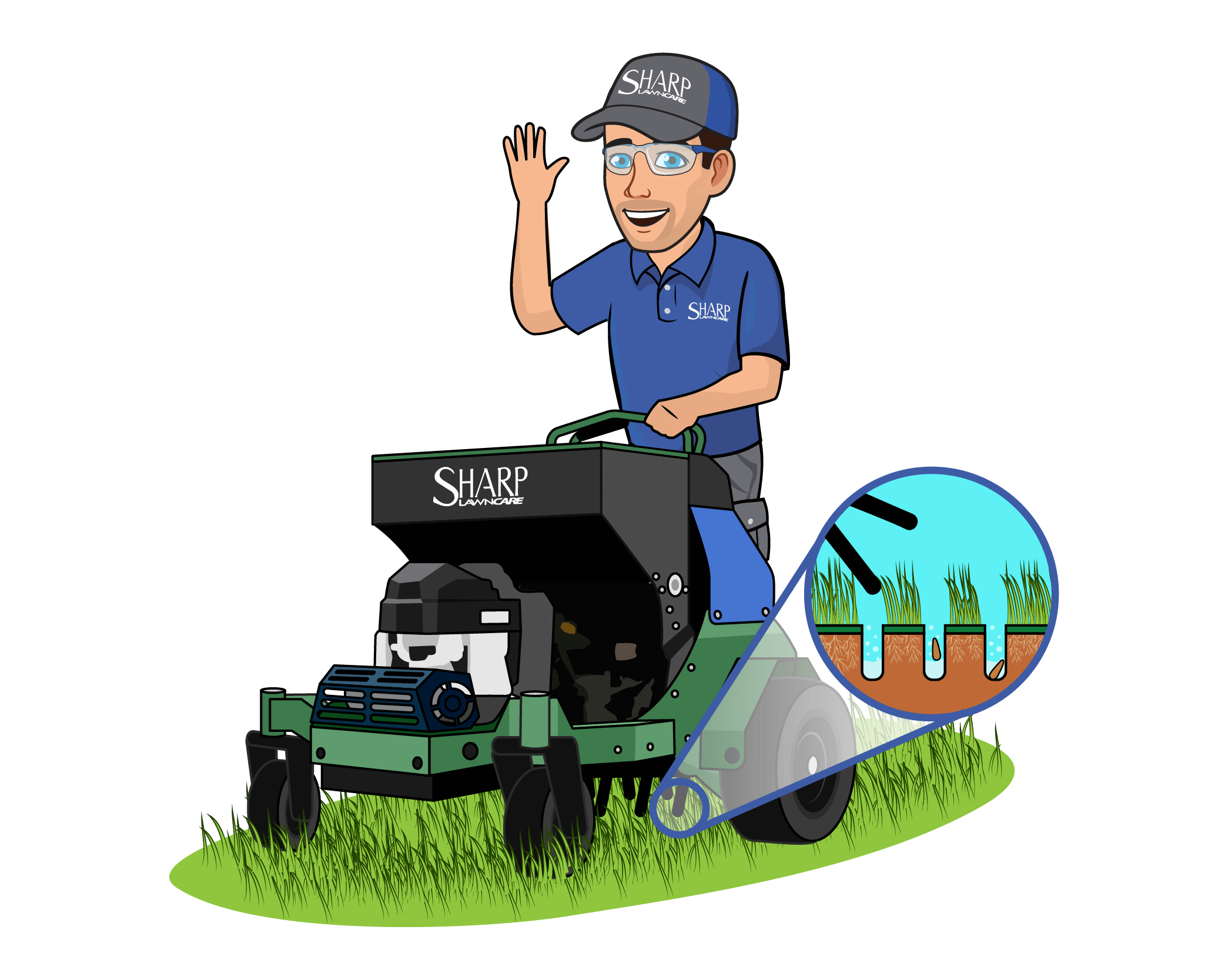
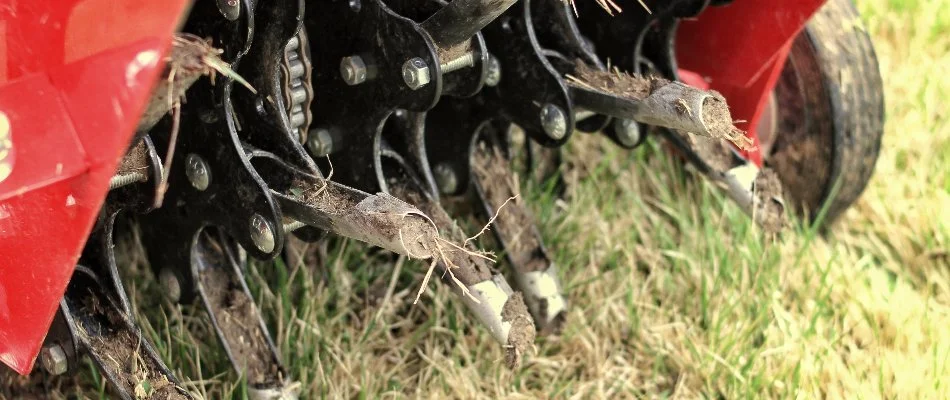
Core aeration is a mechanical process that directly addresses compaction at the root level. A professional core aerator moves across your entire lawn, pulling thousands of small soil plugs—each about 2 to 3 inches deep. These plugs are left on the surface where they break down naturally within a couple of weeks, returning nutrients back into the soil.
The holes left behind immediately open up pathways for water, air, and nutrients to penetrate deep into the root zone. This does several important things at once:
- Reduces soil compaction at the root level—roots can finally expand and grow deeper
- Promotes natural thatch breakdown—eliminates the need to power rake, saving you time and money
- Allows water, air, and nutrients to reach roots—your fertilizer and watering efforts actually work
- Creates seed-to-soil contact for overseeding—seeds fall directly into the holes where they germinate best
The result is a lawn that can actually use the water, fertilizer, and care you’re giving it. Without aeration, you’re working against the soil instead of with it.
When and How Often to Aerate in Sioux Falls
We recommend aerating twice per year—once in spring and once in fall. Spring aeration helps your lawn recover from winter compaction and prepares it for the growing season ahead. The ground has been frozen and compressed for months, and opening it up early gives roots room to breathe as temperatures rise.
Fall aeration is even more critical because it pairs with overseeding for maximum results. When you aerate in the fall window, you create the ideal conditions for new seed to establish before winter. This is a non-negotiable part of the Roadmap to a Sharp Lawn. Skipping aeration—even once—means compaction builds back up, thatch thickens, and everything else you invest in delivers diminished returns.
Consistency is key. Aerating every spring and every fall keeps your soil loose, your thatch at a healthy half-inch level, and your root system expanding year over year.
Aeration + Fall Overseeding — The Most Impactful Service We Offer
If there’s one service combination that transforms lawns faster than anything else, it’s fall aeration paired with overseeding. After the aerator pulls plugs across your lawn, we apply seed directly into the holes where it has direct soil contact—the single most important factor for germination success.
We use a turf-type tall fescue with Kentucky bluegrass blend—the best grass for disease resistance, drought tolerance, and durability in the Sioux Falls climate. When fully established, the root system on this blend grows 2 to 3 feet deep. That means a lawn that can handle heat, drought, and heavy use without thinning out.
To give the seed every advantage, we pair overseeding with three critical support services:
- Starter fertilizer—provides essential early nutrients so seedlings establish quickly
- Seeding pre-emergent (Tenacity)—suppresses weed competition without harming new grass
- Water retention product—prevents seed from drying out during the critical germination window
We recommend overseeding every fall until your lawn is thick and fully established, then every 3 to 5 years after that to maintain density and introduce fresh genetics. The improvement from a single fall aeration and overseeding is visible within weeks—and the results compound dramatically over the following seasons.
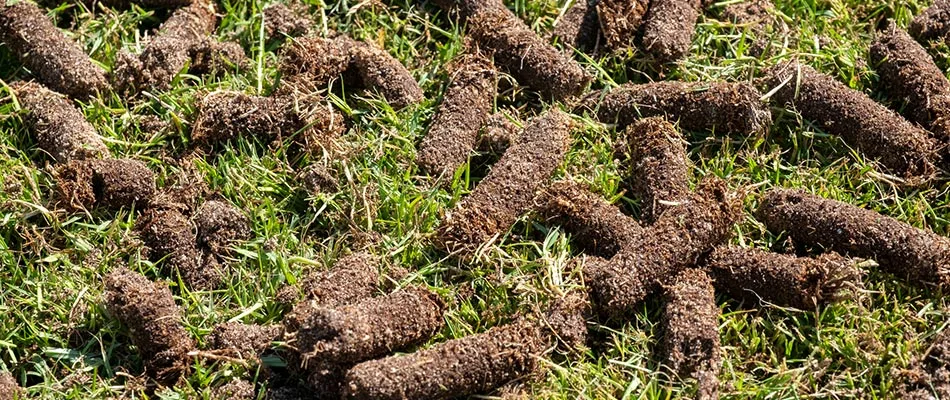
Step 1 of the Roadmap to a Sharp Lawn
Aeration is Step 1 of our proven five-step Roadmap—the process that turns average lawns into the best lawns in the neighborhood. Here’s how all five steps work together:
- Aerate every spring and fall—reduces compaction and replaces the need to power rake
- Quality fertilization and weed control program every year—consistency matters more than any single application
- Overseed in the correct fall window—turf-type tall fescue with Kentucky bluegrass blend for deep roots and drought tolerance
- Mow correctly—when temperatures go up, mowing height goes up
- Water deep every 2–3 days—not frequent, shallow watering
When all five steps work together, results compound over 1 to 2 seasons. Most lawns show major improvement within the first year. Aeration is the foundation that makes everything else work—without it, fertilizer, seed, and water can’t reach the roots where they’re needed. Learn more about our fertilization services in Sioux Falls to see how Step 2 builds on this foundation.
Aeration Service Areas Near Sioux Falls
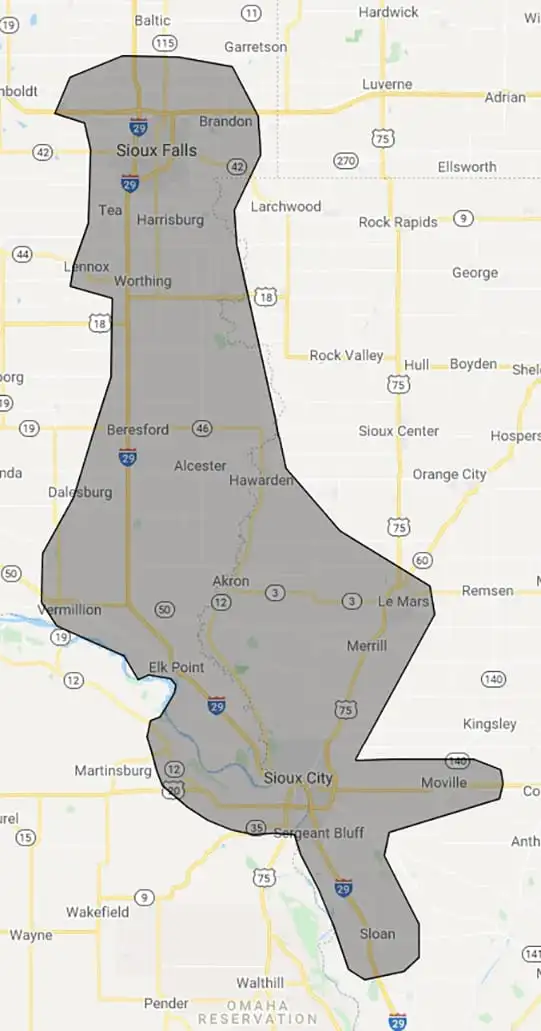
We provide professional lawn aeration across the Sioux Falls metro area, including Sioux Falls, Brandon, Harrisburg, Tea, Lennox, Canton, Hartford, Worthing, Beresford, Buffalo Ridge, Jefferson, and Shindler.
Looking for aeration in the Sioux City area? Visit our Sioux City, IA aeration page.
Related Lawn Care Services in Sioux Falls
- Fertilization in Sioux Falls, SD
- Weed Control in Sioux Falls, SD
- Mosquito Control in Sioux Falls, SD
- Snow Removal in Sioux Falls, SD
- All Lawn Care Services in Sioux Falls, SD
Frequently Asked Questions
- When is the best time to aerate in Sioux Falls?
- We recommend aerating twice per year—once in spring and once in fall. Spring aeration helps your lawn recover from winter compaction, while fall aeration creates ideal conditions for overseeding. This is Step 1 of our Roadmap to a Sharp Lawn, and skipping it means the rest of the process can’t work as effectively.
- How often should I aerate my lawn?
- Every spring and every fall, without exception. Consistent aeration keeps thatch at a healthy level—about half an inch—and reduces compaction so roots can expand. It also eliminates the need to power rake, which saves you money. Think of it like going to the dentist: doing it regularly prevents bigger problems.
- Should I overseed when I aerate?
- Fall aeration is the ideal time for overseeding. We use a blend of turf-type tall fescue with Kentucky bluegrass—the best grass for disease resistance, drought tolerance, and durability. The root system grows 2 to 3 feet deep when fully established. We recommend overseeding every fall until your lawn is thick, then every 3 to 5 years to maintain it.
- What’s the difference between core aeration and liquid aeration?
- Core aeration physically removes soil plugs to relieve compaction and improve water, air, and nutrient movement through the soil. Liquid aeration uses liquid products to help with infiltration and soil structure. We offer both options, but core aeration is our primary recommendation for the best long-term results—especially in the heavy clay soils common across the Sioux Falls metro.
- What areas near Sioux Falls do you serve for aeration?
- We serve Sioux Falls, Brandon, Harrisburg, Tea, Lennox, Canton, Hartford, Worthing, Beresford, Buffalo Ridge, Jefferson, and Shindler. If you’re in the Sioux Empire, we can most likely help.
- Do I need to be home when you aerate?
- No. Our crews handle the work whether you’re home or not. After each service, we leave a note so you know exactly what was done. It’s designed to be completely hassle-free.
- How much does lawn aeration cost in Sioux Falls?
- Aeration pricing depends on your property’s square footage. We recommend aerating twice a year—spring and fall—for the best results. Pairing aeration with a fertilization package gives you the best value and compounding benefits.
Ready for a Healthier Lawn in Sioux Falls?
You’re one phone call away from a lawn that finally has the foundation it needs to thrive. Call (605) 251-6880 or request a free quote online—we’ll get you on the schedule and you’ll see results compounding within the first two seasons.